


Key Features
- High-energy 3350mAh nominal capacity for extended runtime
- Optimized for low-to-moderate current applications
- Nickel-based positive electrode for improved cycle life
- Panasonic Heat Resistance Layer (HRL) for enhanced safety
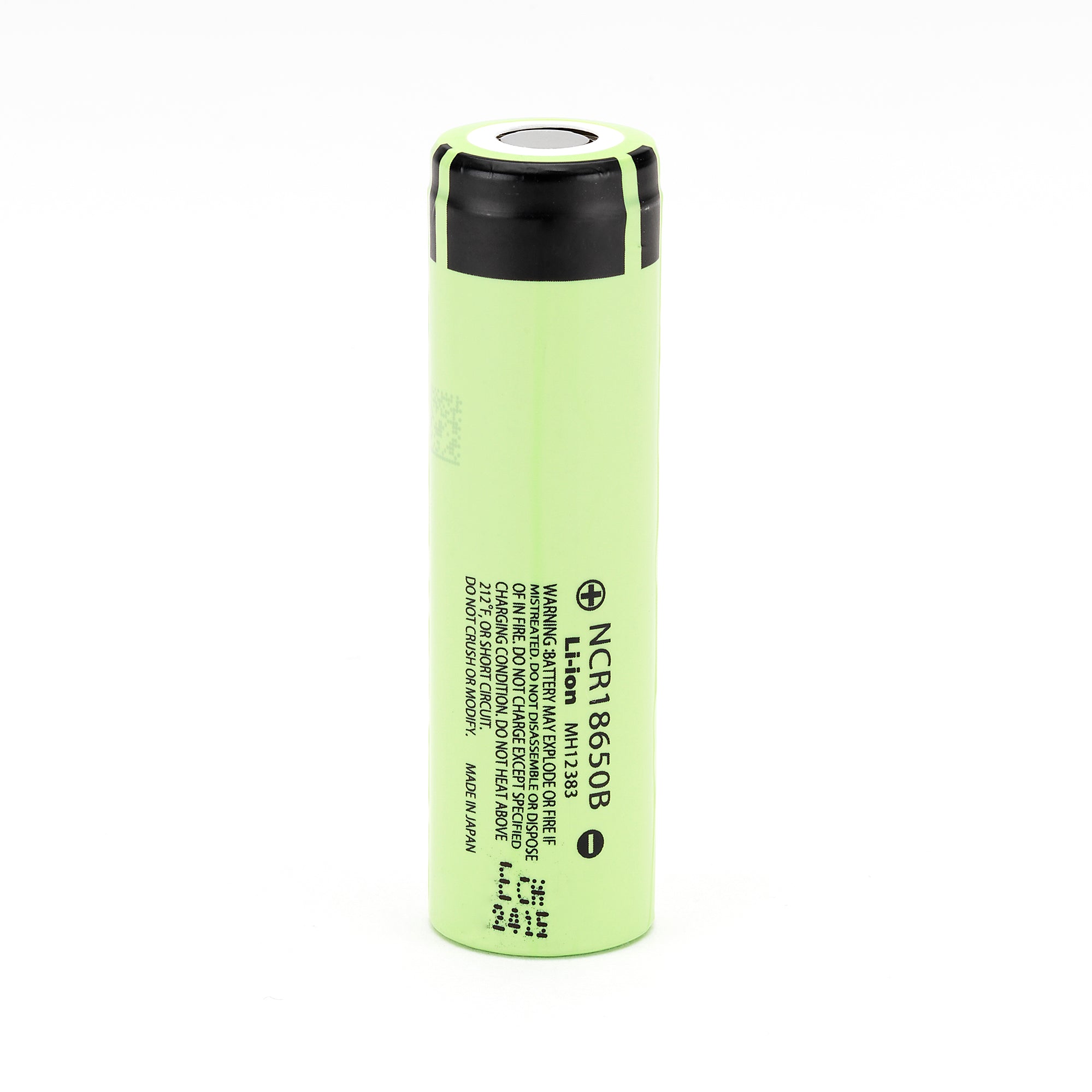
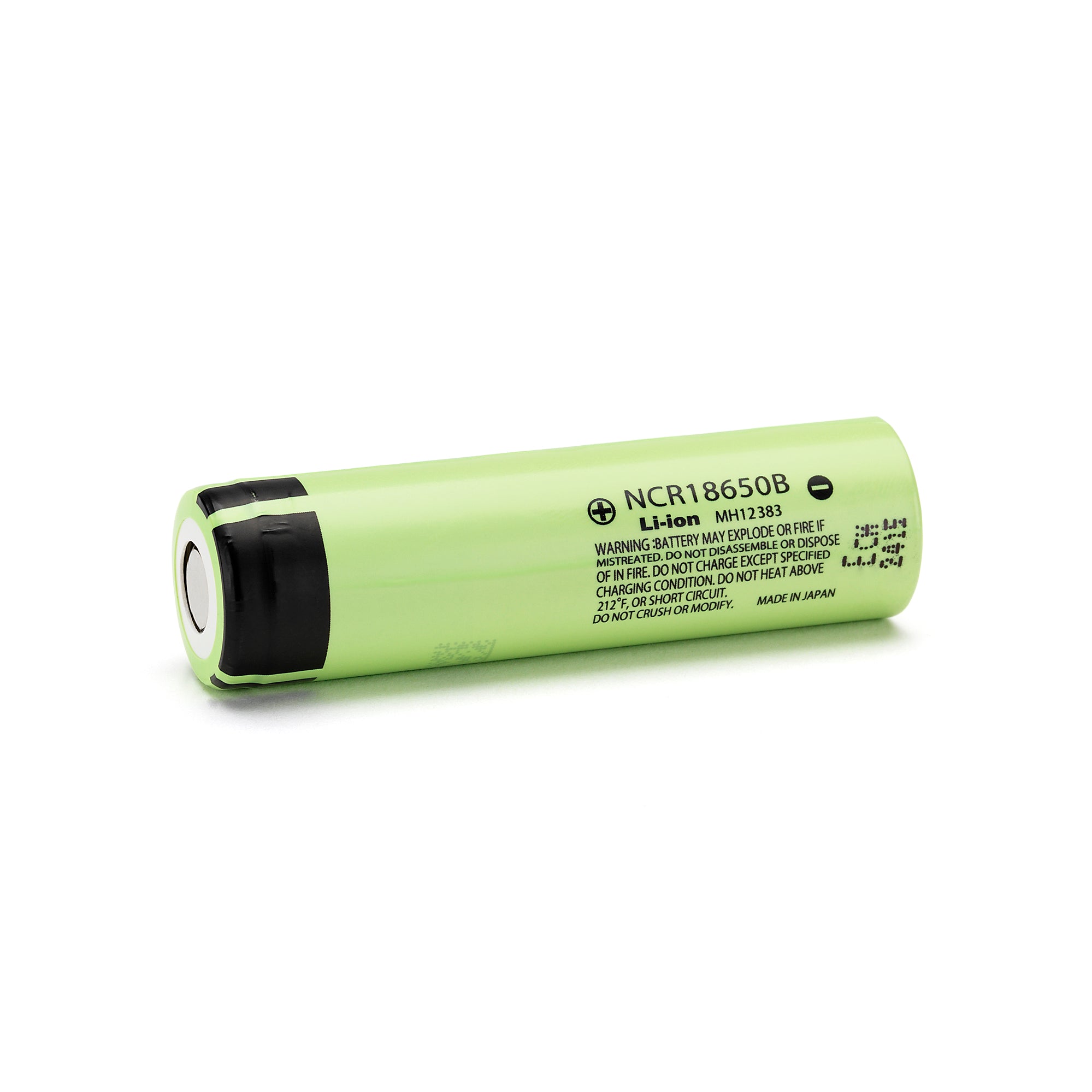
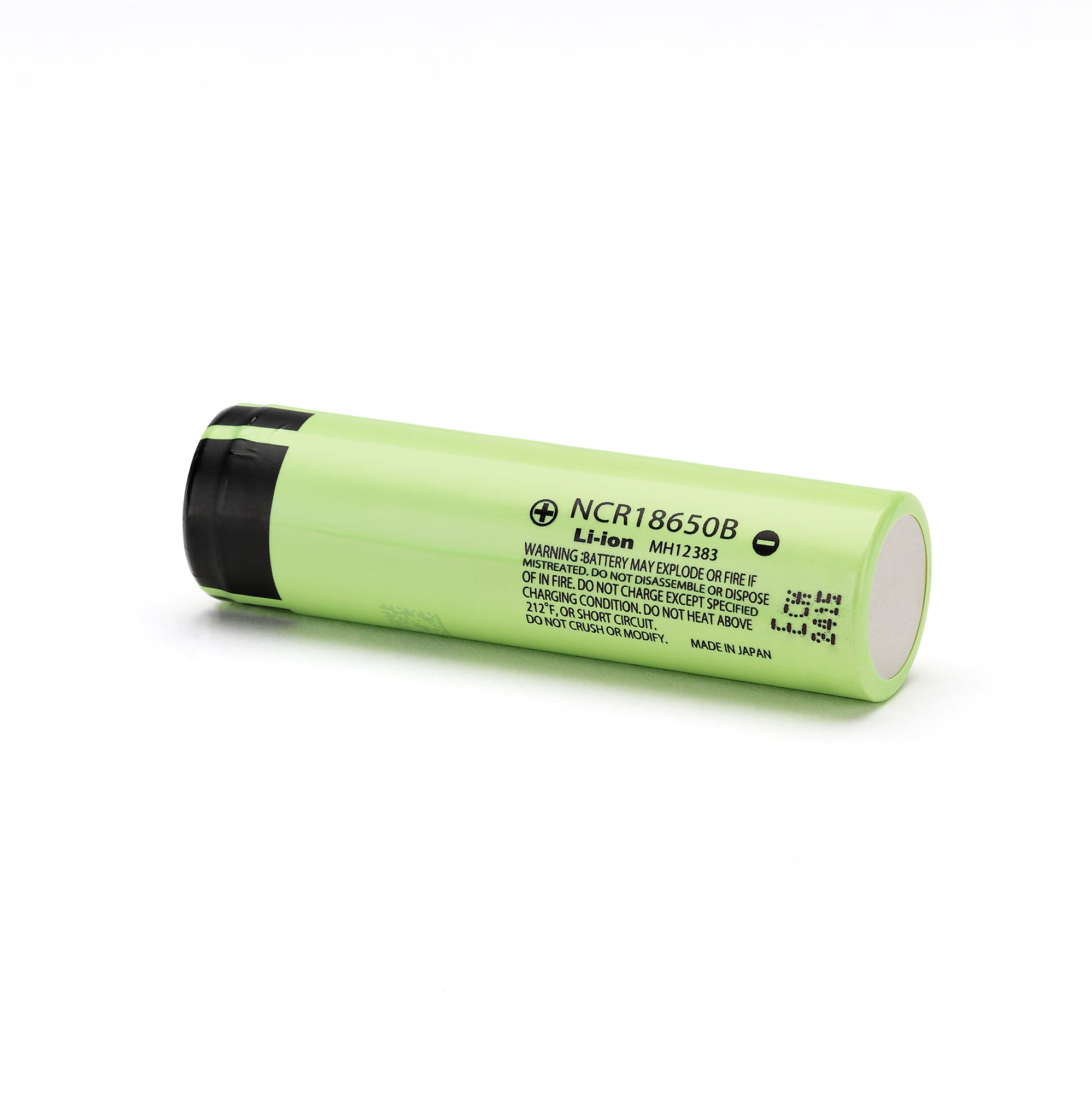
- Flat top, unprotected design for battery pack integration
Overview
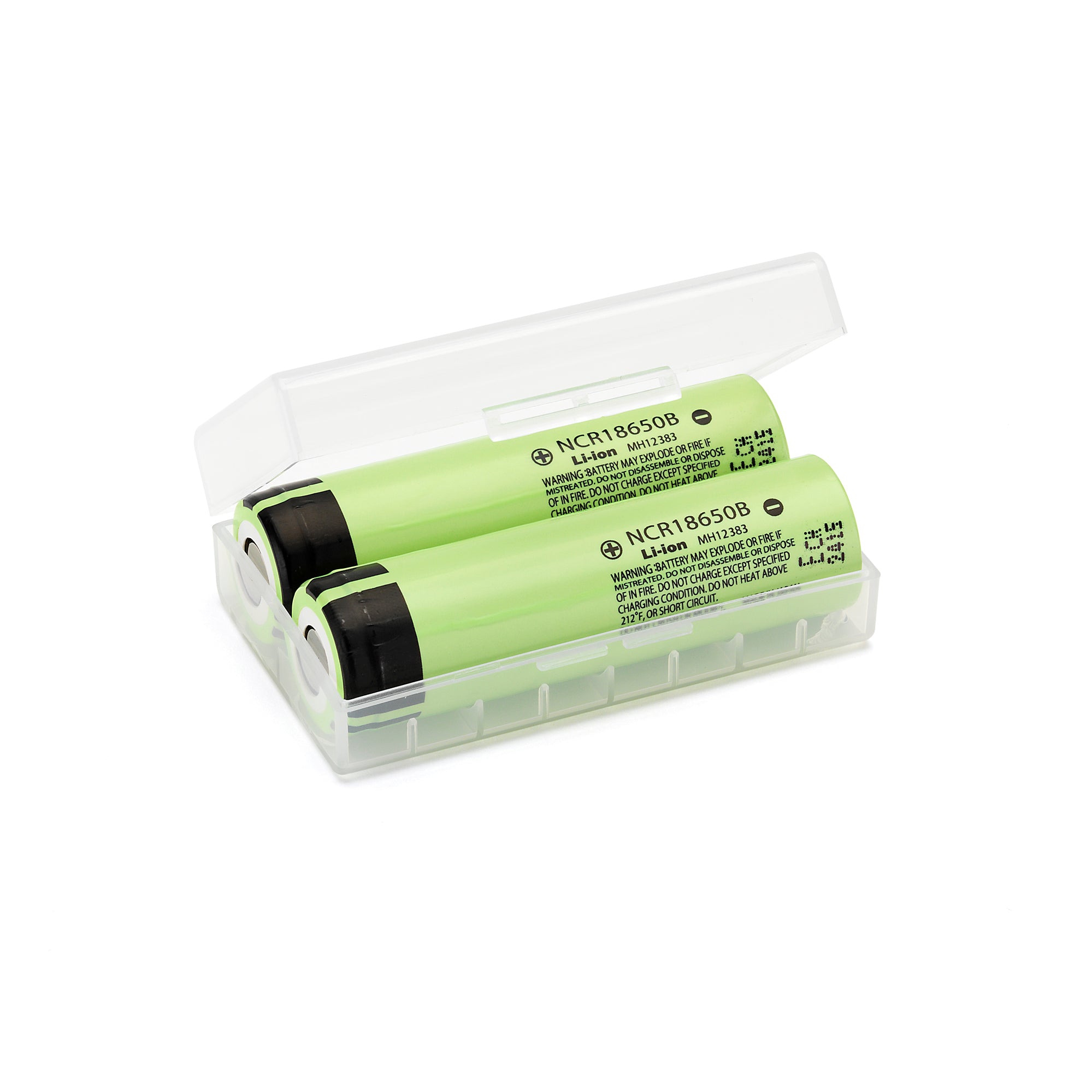
The Panasonic NCR18650B is a high-capacity lithium-ion battery engineered for applications that prioritize long runtime and energy density. Featuring a nominal capacity of 3350mAh and Panasonic’s advanced internal safety technologies, this cell delivers stable, efficient power with excellent cycle life and reliability.
Applications / Uses
- Battery pack assemblies
- Portable power banks
- Energy storage modules
- High-efficiency electronic devices
- Backup and standby power systems
SPECIFICATIONS
| Manufacturer | Panasonic |
| Model | NCR18650B |
| Size | 18650 |
| Positive Terminal | Flat Top |
| Nominal Capacity | 3350mAh (Typical) |
| Continuous Discharge Rating | 4.87A |
| Nominal Voltage | 3.6V |
| Maximum Voltage | 4.2V |
| Discharge Cut-Off Voltage | 2.5V |
| Protected | No (Unprotected) |
| Rechargeable | Yes |
| Approx. Dimensions | 18.63mm × 65.08mm |
| Approx. Weight | 47.5g |
| Data Specification Sheet | Panasonic NCR18650B Datasheet |
⚠ Important Safety Warnings
Improper handling or misuse of this lithium-ion battery can result in FIRE, EXPLOSION, or THERMAL RUNAWAY, causing personal injury, property damage, or death. Users must read and follow all safety guidelines before purchase and use. Click here to review the full safety guidelines.
- Critical Warning: Never carry loose batteries in your pocket, purse, or bag. Loose batteries can come into contact with metal objects like keys or coins, causing a short circuit, which may result in severe burns, fire, or explosion. Always store or transport batteries in a protective case.
- Intended Use: This battery is designed for integration into protected battery packs with a Battery Management System (BMS) or Protection Circuit Board (PCB). It is not intended for standalone use or for e-cigarettes, vaporizers, or similar devices.
-
Thermal Runaway: A chain reaction where heat from a failing battery
causes further overheating, potentially leading to fire or explosion.
- Causes: Overcharging, short circuits, physical damage, or exposure to high temperatures.
- Prevention: Use a smart charger, avoid damage, and store batteries in a cool, dry place.
- Storage & Transport: Always store batteries in protective cases to prevent accidental contact with metal objects. Never store loose batteries in pockets, purses, bags, or near conductive materials.
- Inspection: Do not use if the PVC wrapper, terminal insulator, or casing is damaged, dented, leaking, or bulging. Continued use could result in failure, fire, or explosion.
- Charging: Use a smart charger specifically designed for lithium-ion batteries and ensure the charger's voltage matches the battery's specifications. Never overcharge, over-discharge, or leave unattended while charging.
-
Prohibited Activities:
- Do not expose the battery to extreme heat, fire, or liquids.
- Do not short circuit, puncture, crush, or modify the battery.
- Do not charge or discharge beyond the manufacturer’s voltage range.
- Do not dispose of in regular trash—always recycle at approved facilities.
- Emergency Response: If a cell shows signs of thermal runaway (e.g., smoke, swelling, hissing, or heat), stop use immediately and, if it can be done safely, move it to a non-flammable surface (e.g., concrete or sand) away from combustible materials. Lithium-ion cells burn as Class B fires — use an ABC / dry-chemical fire extinguisher, or douse with large amounts of water to cool the cell and prevent the fire from spreading. Do not rely on a small spray; thorough cooling is required, and cells can reignite from residual heat, so monitor the area afterward. (Class D extinguishers are intended for lithium-metal batteries, not lithium-ion.) For any fire beyond a single small cell, evacuate and call emergency services.
Disclaimer
18650Battery.com is not responsible for any damages, injuries, or claims arising from improper use, handling, or failure to follow these safety guidelines. Lithium-ion batteries require strict adherence to all safety protocols. It is the reseller's responsibility to ensure all safety warnings and product guidelines are effectively communicated to customers. Users and resellers assume full responsibility for the safe handling, usage, and distribution of this product.